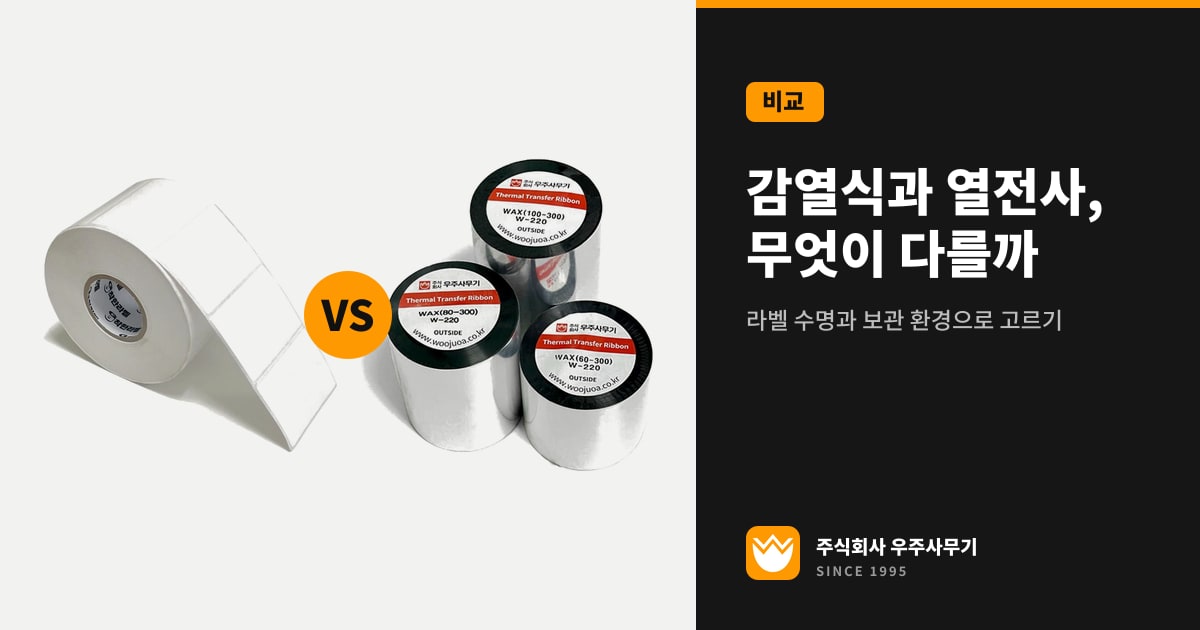
Labels used and removed within 1 week to 1 year, such as parcel shipping labels, receipts, and visitor passes, are printed by direct thermal. Labels that must last several years or that are exposed to sunlight, abrasion, or chemicals, such as asset tags and product marking labels, suit thermal transfer, which uses a ribbon.
Both methods print with printhead heating dots lined up 8 per mm at 203 dpi. Direct thermal turns paper coated with heat-sensitive chemicals black directly, while in thermal transfer the printhead presses the ribbon to melt ink onto the label.
Direct thermal and thermal transfer comparison
| Item | Direct thermal | Thermal transfer |
|---|---|---|
| Consumables | Direct thermal labels | Thermal transfer labels + ribbon |
| Print lifespan | 1 week to 1 year uses | Multi-year uses |
| Weak against | Heat, fluorescent light and direct sunlight, abrasion | Resistant to heat and moisture when ribbon and label are matched |
| Printed surface | Background darkens with long exposure to heat and light | Glossy printed surface that does not rub off |
| Printhead life | Label touches the printhead directly | Ribbon sits in between, so it lasts longer than direct thermal |
Text and barcodes on direct thermal labels with a darkened background cannot be read. Thermal transfer takes 2 consumables, labels and ribbon, but the ribbon's backcoat protects the printhead, so the printhead lasts longer than with direct thermal.
Direct thermal label uses and the SLP-DX420 and ZD421 direct thermal models
Parcel shipping labels, patient and visitor identification labels, receipts, and tickets are direct thermal uses. With no ribbon to change, you just load a roll and print.
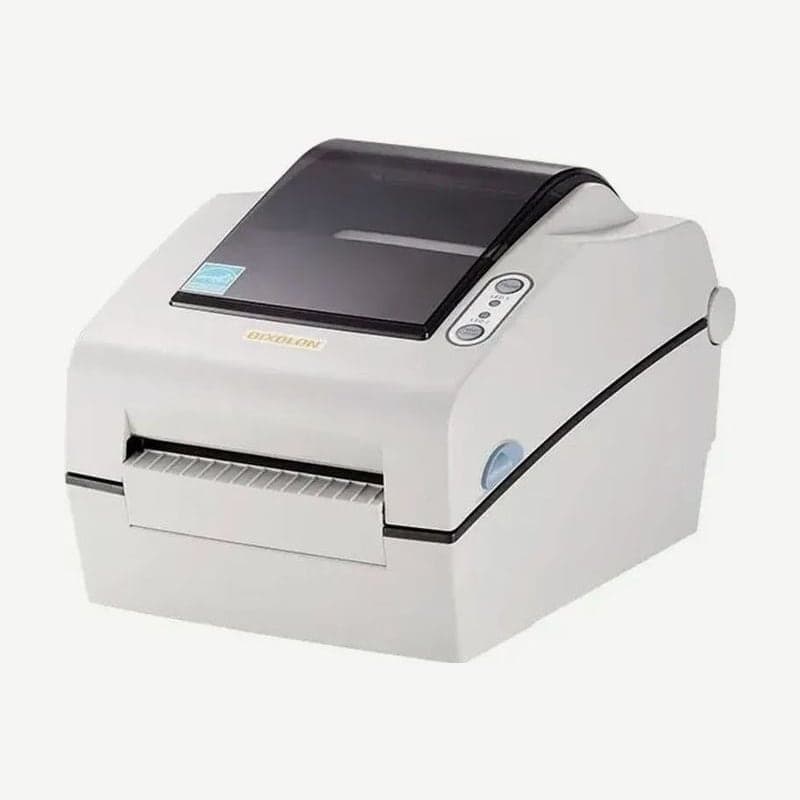
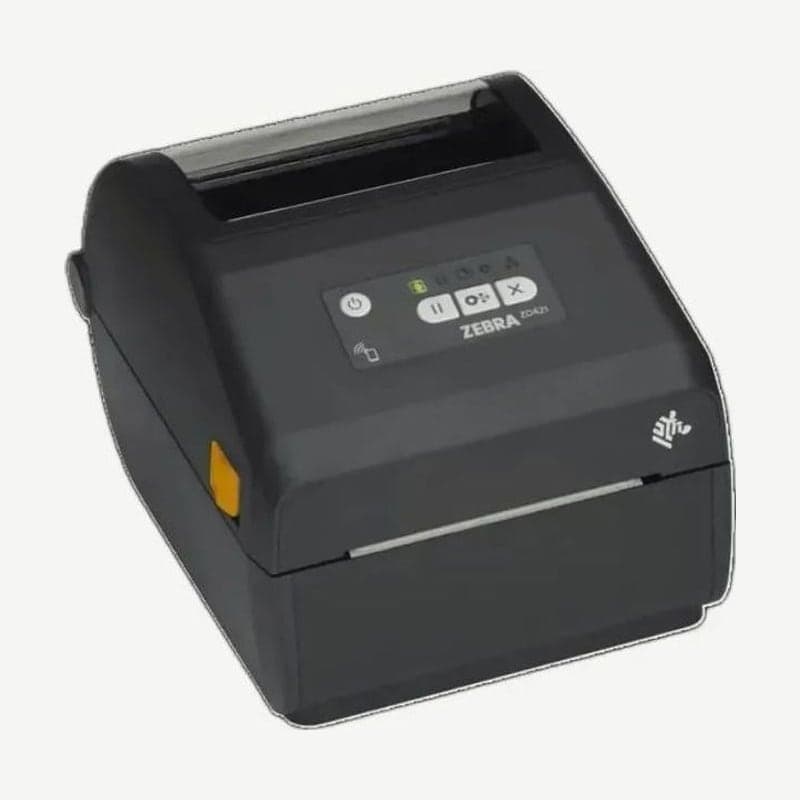
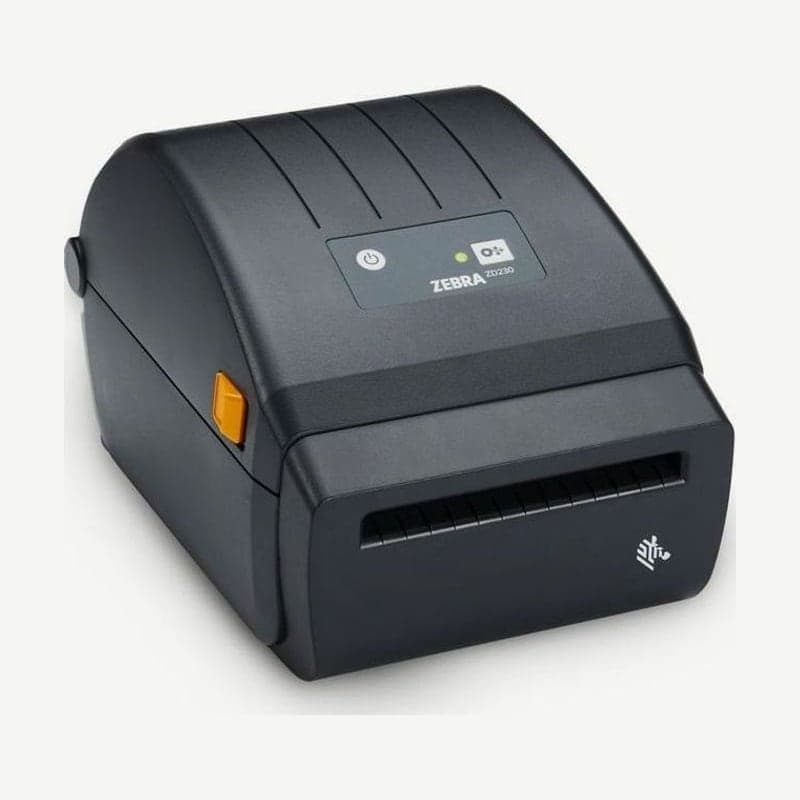
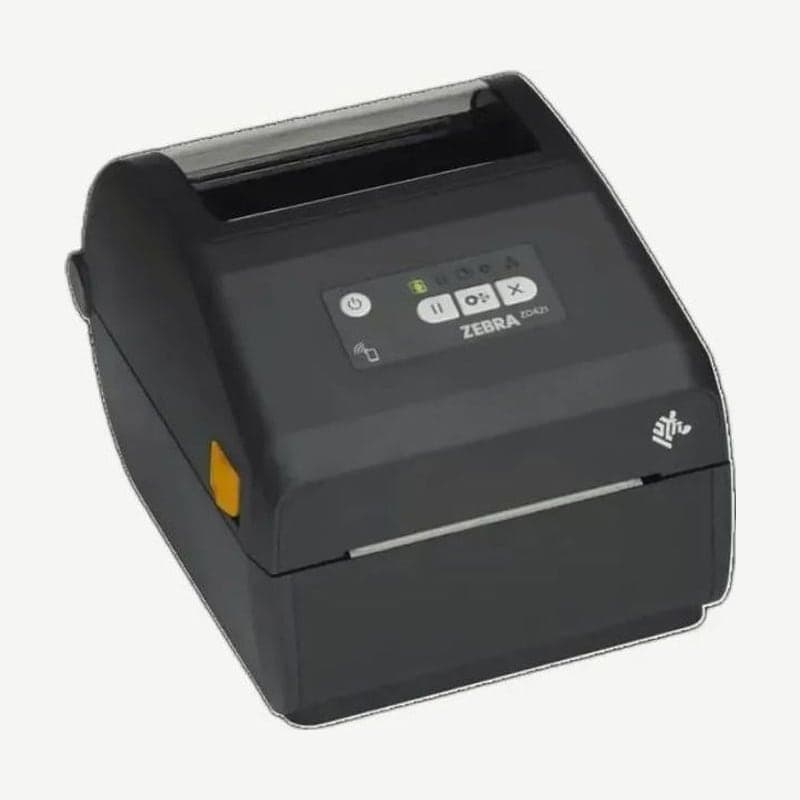
The Bixolon SLP-DX420 and the Zebra ZD421 direct thermal model and ZD230D are direct thermal only with no ribbon, so if you later need a ribbon, you must change printers.
For direct thermal labels exposed to sunlight or chemicals, choose topcoated products whose surface is coated once more to resist UV, chemicals, and abrasion. Where labels meet water, use waterproof direct thermal labels such as Goodlabel synthetic direct thermal labels (40 x 20 to 100 x 100 mm).
Thermal transfer label uses and an XD5-40t installation
Labels that must last several years, such as asset management tags, product marking labels, and certification labels, are printed by thermal transfer. When ribbon and label are properly matched, they withstand extreme temperatures, UV, chemicals, and even sterilization; for Goodlabel synthetic labels, we match 300 m rolls of wax ribbon 40-110 mm wide.
When we built an admission ticket (wristband) issuing system for a dermatology clinic, we set it up with the Bixolon XD5-40t thermal transfer model connected over Wi-Fi. Pairings of ribbon grade and label material are covered separately in thermal transfer ribbon types.
Switching modes on dual-mode printers such as the ZT411 and TTP-247
The Zebra ZT411, the TSC TE210 and TTP-247, and the Bixolon XD5-40t print thermal transfer with a ribbon loaded and direct thermal without one.
On the ZT411, choose Thermal Transfer or Direct Thermal directly in Menu > Print > Print Quality > Print Type on the home screen. The TSC TTP-247 sets the print mode on its own by detecting whether a ribbon is loaded, and if no ribbon is detected, it stops the ribbon take-up motor.
How to tell thermal paper from thermal transfer labels
If you cannot tell the method from the label roll alone, scratch the printed surface quickly and firmly with a fingernail or pen cap. If friction heat leaves a black mark, it is thermal paper printed without a ribbon; if there is no mark, it is a thermal transfer label that needs a ribbon.
Loading thermal transfer labels in the Zebra ZD421 direct thermal model makes labels come out blank. If nothing prints at all, check the label type before suspecting a printhead fault.
Storage conditions for direct thermal labels
Direct thermal labels are chemically treated to react to heat, so leaving them in direct sunlight or next to a heater damages them before printing. Keep them in a clean, dry, cool, dark place, and do not store them with chemicals or detergents.
Open the packaging just before use, and use labels with an expiration date oldest first. Remove the outermost layer of the roll before loading so less dust transfers to the printhead. Label types by material are compared in label paper types.