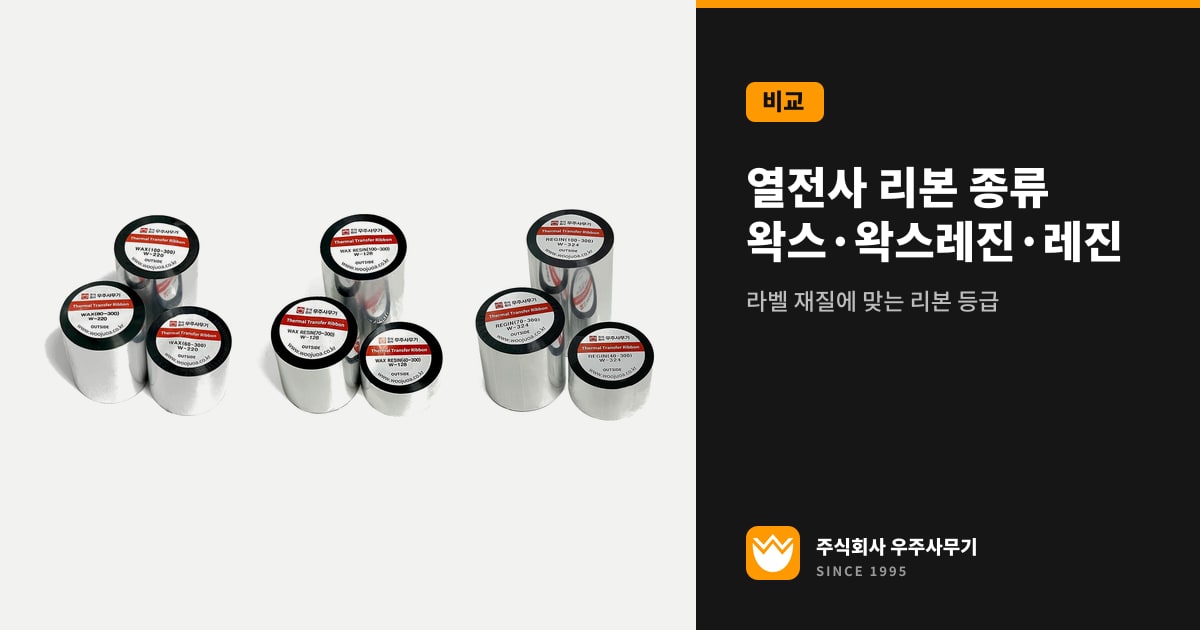
Thermal transfer ribbons come in 3 grades by ink composition: wax, wax/resin, and resin. Paper labels pair with wax, coated paper and matte synthetic labels with wax/resin, and synthetic labels exposed to chemicals, high heat, or outdoor conditions with resin.
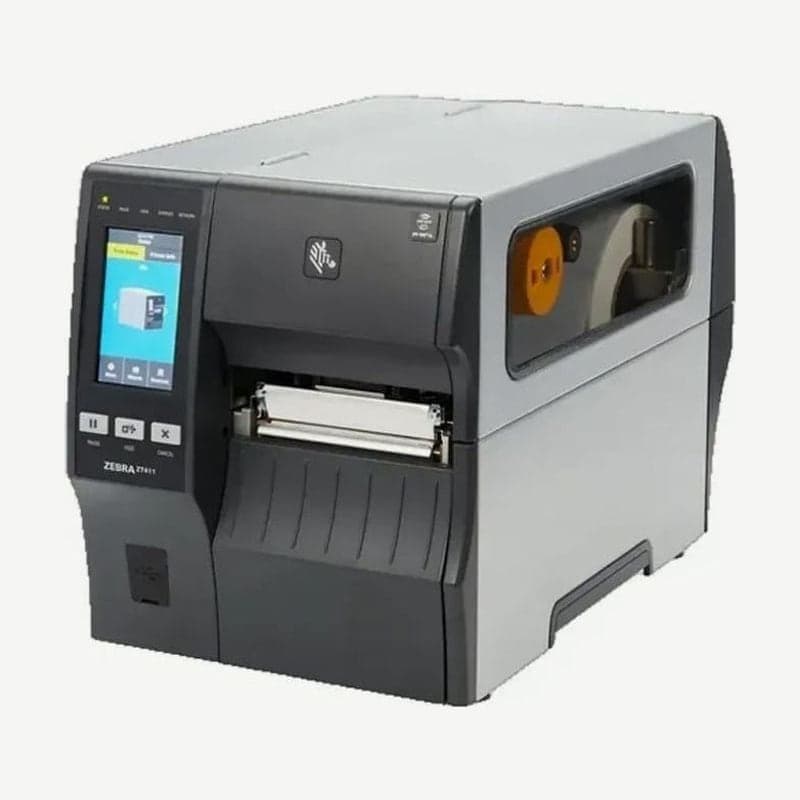
After deciding the grade, match the ribbon width set for each printer, such as 51-110 mm on the ZT411, and the ink side direction.
Comparison of the 3 grades: wax, wax/resin, and resin
| Item | Wax | Wax/resin | Resin |
|---|---|---|---|
| Matching labels | Paper | Coated paper, matte synthetic | All synthetics, some coated labels and tags |
| Chemical exposure | Almost none | Moderate to severe | Severe to extreme |
| Other conditions | High-speed printing (up to 12 ips) | Smudge and scratch resistance | Extreme heat, harsh outdoor use |
Wax ribbons suit high-speed printing at 12 inches (305 mm) per second but are weak against chemicals and abrasion; moving from wax/resin to resin, resistance to chemicals, abrasion, and heat increases.
Recommended uses for 6 Zebra ribbons
If the grade name alone makes it hard to choose, look at the recommended uses by product number, such as 1600, 6100, and 5100. The 4800 is sold only in Europe, the Middle East, and Africa.
| Grade and product | Recommended uses |
|---|---|
| Wax 1600 | Shelf and pallet scan labels, receiving and shipping labels, inventory tracking |
| Wax 2100 | Product labels scanned repeatedly, pharmacy labels, packaging that needs some scratch resistance |
| Wax/resin 6100 | Labels exposed to solvents and chemicals, harsh outdoor labels, labels exposed to water, steam, acids, and alkalis |
| Wax/resin 3200 | Outdoor tags for wire, cable, and machined parts, shipping labels that need scratch resistance, pharmacy labels |
| Resin 4800 | Paper packaging labels that pass through heat shrink tunnels, labels for surgical instruments that go into autoclaves |
| Resin 5100 | High-heat sites such as steelmaking and printed circuit boards, outdoor asset tracking |
Resin 4800 is also matched with Zebra coated paper labels. For paper packaging labels that pass through heat shrink tunnels, use resin 4800 even though the label is paper.
The 4 layers of a ribbon and the backcoat
From the printhead side, a ribbon has 4 layers: backcoat, base film, release layer, and ink layer. The thickest layer is the base film; the Zebra 6100 wax/resin ribbon has a 4.5 µm base film and a total thickness of 7.1 µm.
Of the 4 layers, the backcoat that touches the printhead protects it from heat, static, and friction. With a poor backcoat, the ink layer contacts the printhead and blocks the heating elements, or friction with the printhead damages it and builds up static.
Wooju OA ribbons W-220, W-128, and W-324
Our ribbons come in three grades: W-220 (wax), W-128 (wax/resin), and W-324 (resin). The length specifications are the same, so moving up from W-220 to W-324 keeps the same ribbon change interval.
W-220 is a 300 m roll matched to art paper and synthetic (YUPO) labels. One roll of W-220 prints about 5 rolls of our labels; for stronger printing, move up to W-128, and for the strongest, W-324. All three grades are wound with the ink side on the outside of the roll, and the label on the end of the roll is marked OUTSIDE.
Ribbon width, length, and ink side direction for 6 printers
| Printer | Ribbon width | Max length | Ink side |
|---|---|---|---|
| Zebra ZT411 | 51-110 mm | 450 m | Outside (inside with optional spindle) |
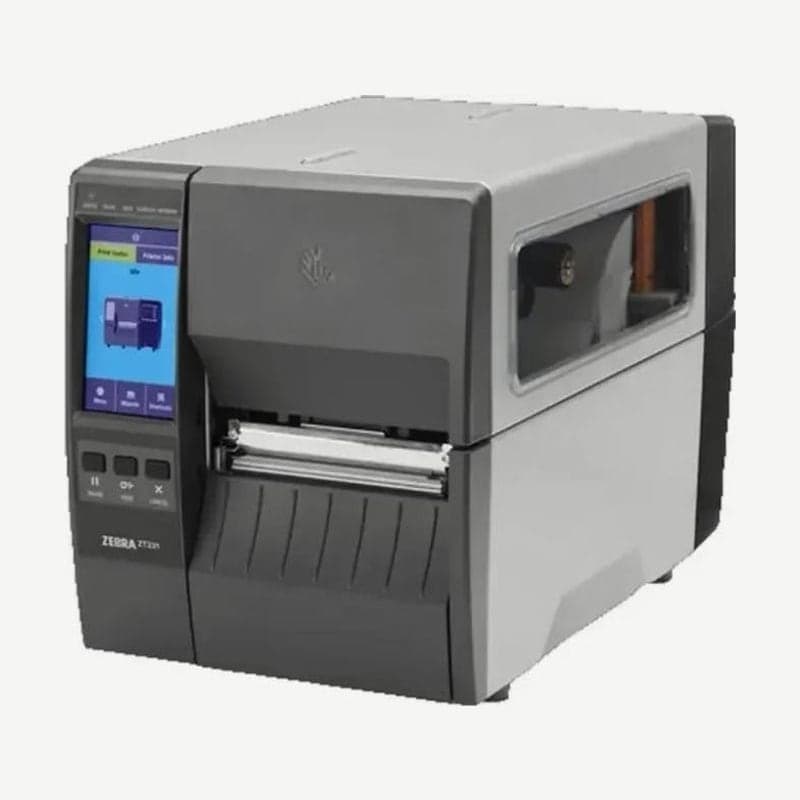
| Zebra ZT231 | 40-110 mm | 450 m | Outside |
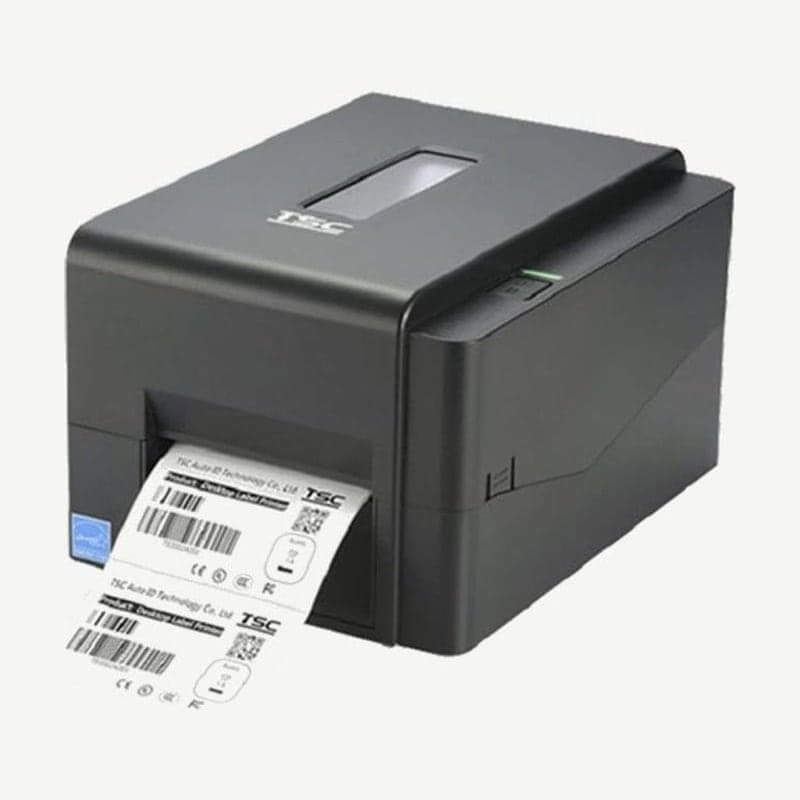
| TSC TE210 | 40-110 mm | 300 m (1-inch core) | Outside |
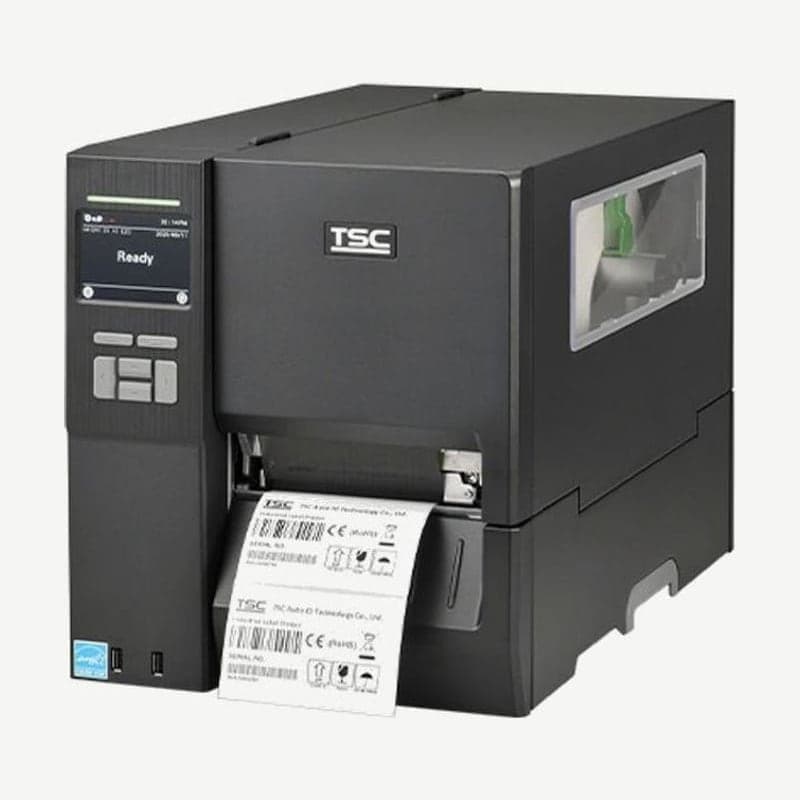
| TSC MH241 | 25.4-114.3 mm | 600 m | Outside and inside |
| Honeywell PC45t | 25-110 mm | 300 m | Outside and inside |
| Bixolon SLP-TX400 | 33-110 mm | 300 m (1-inch core) | Outside |
Use a ribbon the same width as or wider than the label, such as a 110 mm ribbon for a 100 mm wide label. If the width falls short, part of the printhead touches the label surface directly and wears out first; printhead care is covered separately in printhead cleaning.
Tests for checking ink side direction
If the end of the roll has no marking such as OUTSIDE, check with one of the two tests below. If the result shows an inside coating, repeat it on the other side of the roll to confirm.
| Test | What you need | Ink side out | Ink side in |
|---|---|---|---|
| Adhesive test (also works on a loaded ribbon) | 1 label with the liner removed | Stick it to the outer surface of the roll and peel it off; ink comes off on the label | No ink on the label |
| Scratch test | 1 sheet of white paper | Place the outer surface against the paper and scratch the back with a fingernail; a mark is left on the paper | No mark on the paper |
Loading a ribbon with the ink side reversed on the ZT411 makes the ribbon break or melt. On the ZT411, darkness set too high also burns the ribbon with the same symptom, so lower the ZT411 darkness first before changing the ribbon.
Ribbon storage at 22°C and storage period
Zebra 6100 and 3200 wax/resin ribbons are stored unopened at 22°C and 50% humidity, with a storage period of 1 year.
The difference from direct thermal labels, which need no ribbon, is compared in direct thermal vs thermal transfer.