Products supplied to supermarkets, convenience stores, and department store food halls in Korea must receive a GS1 standard code (GTIN) and carry it as a barcode. The only issuer in Korea is GS1 Korea (Korea Chamber of Commerce and Industry Distribution and Logistics Institute); you join as a member, receive a company code, and add a product number and check digit to it to make a 13-digit GTIN.
8-, 12-, 13-, and 14-digit GTINs and barcode types
GTIN is a numbering system of 8, 12, 13, and 14 digits, and a barcode is the symbol drawn so a scanner can read this number. The most widely used GTIN-13 consists of a country code, company code, product code, and 1 check digit, and the country code for Korea is 880. 880 is a country code but does not indicate the country of origin.
| Barcode | Number and data it holds | Where it goes |
|---|---|---|
| EAN-13 | GTIN-13 | Retail products scanned at checkout |
| EAN-8 | 8-digit GTIN | Small retail products such as cigarettes and gum |
| ITF-14 | GTIN-14 | Boxes and pallets moving through distribution centers |
| GS1-128 | GTIN + production date, expiration date, batch number, serial number | Logistics units such as pallets, traceability |
| GS1 DataMatrix | GTIN + additional data (2D) | Medical devices and pharmaceuticals |
| GS1 DataBar | GTIN (small size) | Retail items such as fresh food |
GTIN-14 is for boxes and pallets only, so it is not put on products sold individually at checkout, and only 1-8 are used for the leading logistics indicator digit. GS1-128 puts an application identifier (AI) in front of each piece of data.
Who assigns GTINs, and 3-year membership
GTINs are assigned by the brand owner regardless of where or by whom the product is made, and not only manufacturers but also suppliers, importers, wholesalers, and retailers become the brand owner for products under their own brand.
A company code is used only by that company and cannot be sold or lent, in whole or in part, to another company, and membership is renewed every 3 years after joining. If the deadline passes, membership is lost. Inquiries go to the member services office at +82-2-6050-1400 to 1405.
Four channels, large supermarkets, supermarkets, convenience stores, and department store food halls, require GTIN barcodes, while stationery stores, specialty stores, and online marketplaces require them only in part. Coupang and Gmarket recommend attaching GTINs and barcodes when goods are received at their fulfillment centers, and Amazon also recommends official GS1 GTINs for product listings.
Since the 2005 integration, 13-digit codes starting with 880 also work in North America, so unless there is a special case, a separate UPC is not obtained. Codes officially issued by overseas GS1 organizations are also used as they are in Korea, but check with the retailer first.
The boundary between internal RCNs and GTINs
The GS1 standard reserves separate number ranges for internal and regional use only (RCN). RCNs go only into EAN-13, EAN-8, UPC-A, and UPC-E symbols and are not used with application identifiers, and the company using them manages the number structure and reuse.
Internal numbers are not uniquely assigned to a supplier, so a manufacturer making private-label (PB) products for several customers that uses only internal numbers cannot tell the customers apart and cannot use EDI or electronic catalogs.
Changes that require a new GTIN
One product gets only 1 GTIN, and the number does not change unless the product's characteristics change. The main changes requiring a new GTIN are listed below.
- A new flavor or scent, style, size, or color, or a new function gets a new number; a T-shirt in 3 colors and 2 sizes has 6 GTINs.
- If the actual net content increases or decreases, it is a new number, and if any one of the package's width, depth, or height, or the gross weight, changes by 20% or more, it is also a new number.
- If the number of units in a pack or case, or the number of cases forming a pallet, changes, the higher packaging level gets a new number.
- If even 1 component of a bundled product changes, or a certification mark is added to or removed from the package, a new number is also assigned.
- If the package design is changed overall for a seasonal promotion, or the main brand changes, a new number is used.
- If the formulation or function changes so that customers and consumers can tell the difference, or package labeling must legally be revised, it is a new number.
A change in label color from light pink to deep pink keeps the same GTIN, and price is not a change criterion unless printed directly on the package. From January 1, 2019, GTINs of discontinued products are not reassigned to other products; only numbers withdrawn before then follow the previous rule (reuse after at least 48 months).
Print position and size for product and logistics barcodes
| Item | Standard |
|---|---|
| EAN-13 size (including quiet zones) | Standard 100% 37.29 x 22.85 mm, minimum 80% 29.83 x 18.28 mm, maximum 200% 74.58 x 45.70 mm |
| EAN-8 size (including quiet zones) | Standard 100% 26.73 x 18.23 mm, minimum 80% 21.38 x 14.58 mm |
| Retail product position | Lower right of the back, 8-100 mm from the package edge |
| Logistics box position | At least 19 mm from a vertical edge, including quiet zones |
| Pallet position | 400-800 mm above the floor, at least 50 mm from a vertical edge |
On cylindrical products, apply the barcode in ladder orientation, with the bars lying horizontal. If the bars stand upright wrapped around the circumference, both ends curve away and the scanner cannot see it all at once. Do not fold barcodes over edges, and for packages whose outer film reflects light, check whether contrast drops.
Print bars in a dark color on a light background; red bars are seen as white by scanners and cannot be read. Barcodes with reduced height read only when the scanner light is perpendicular to the bars, so keep the standard height to allow scanning from various angles.
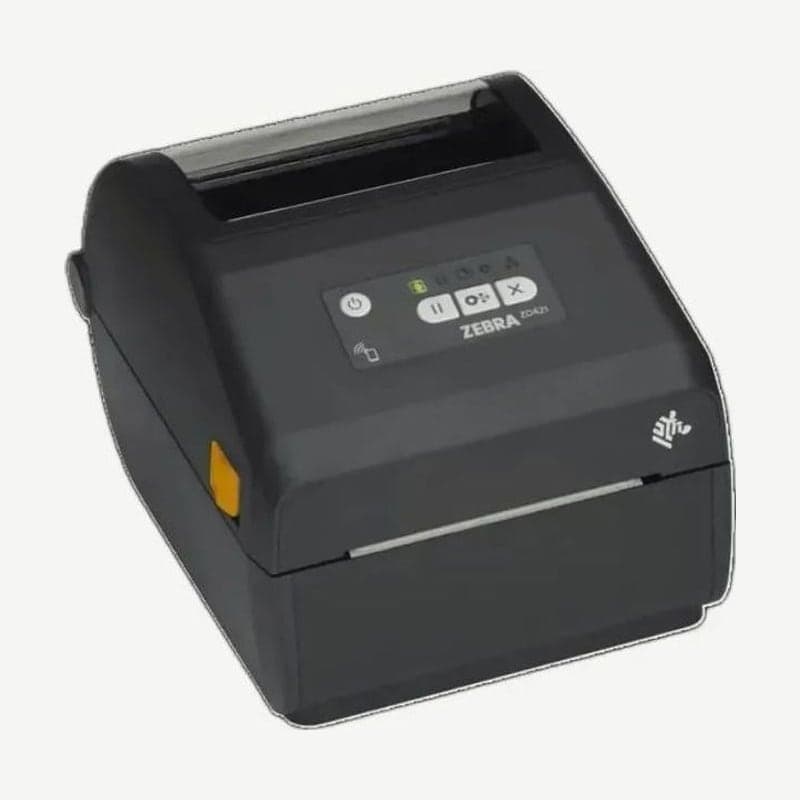
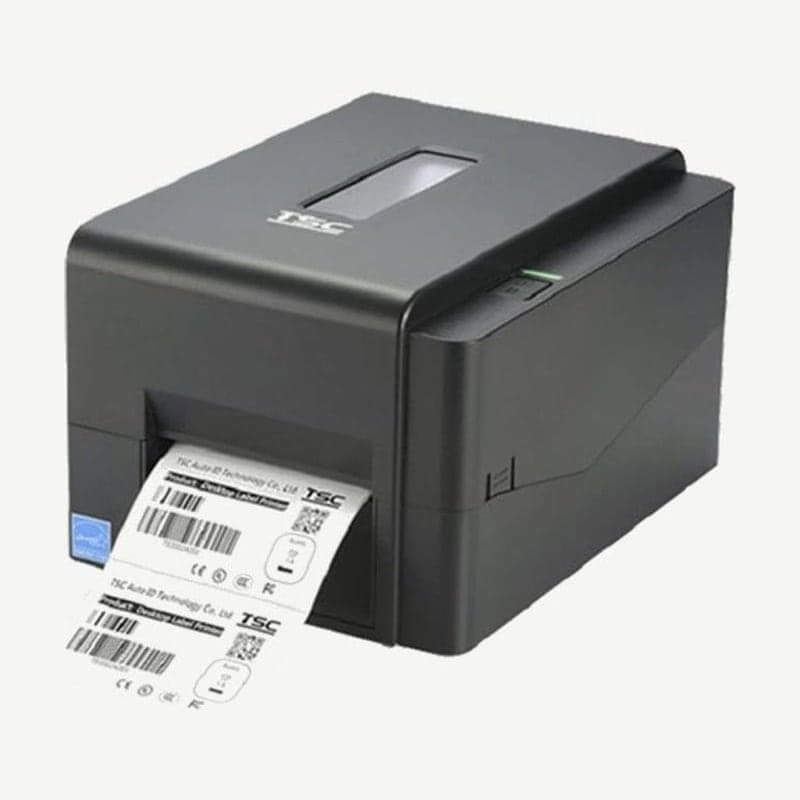
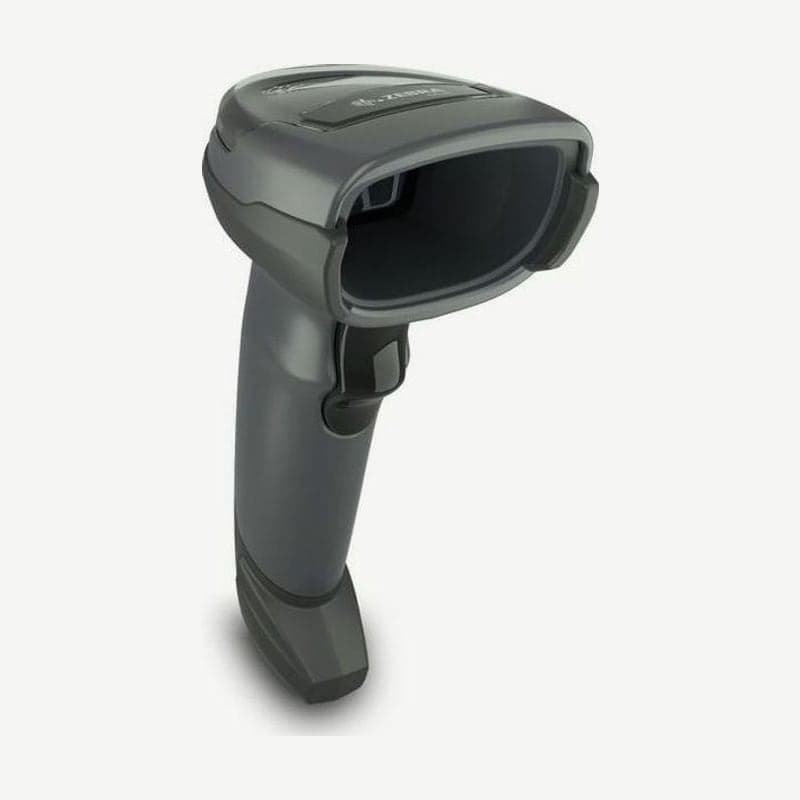
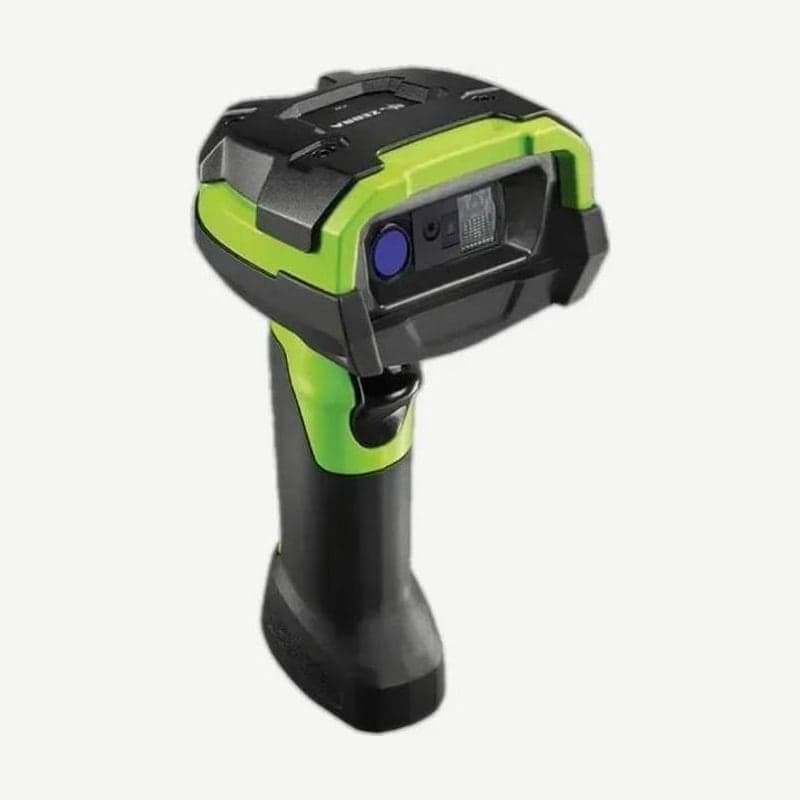
If you print on labels yourself, how to set the EAN-13 magnification by resolution is in 203 dpi vs. 300 dpi, and scanners that read 2D codes are in barcode scanner types.