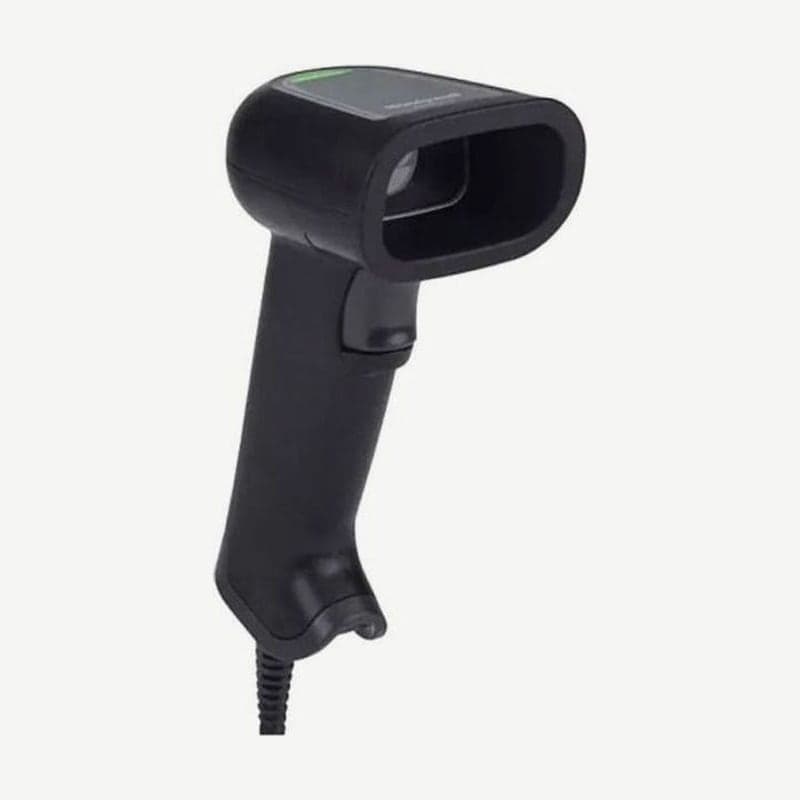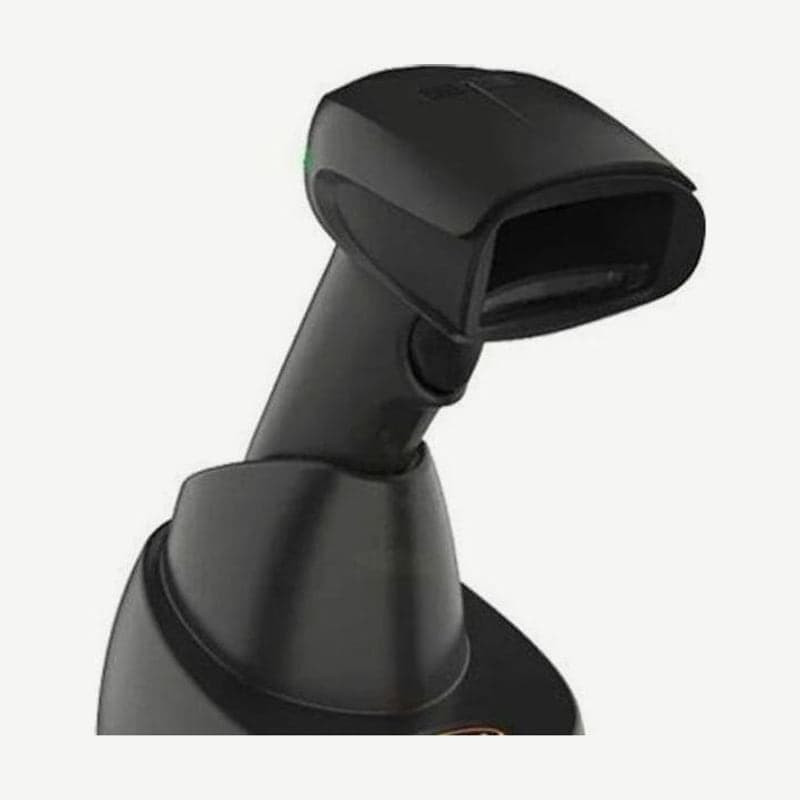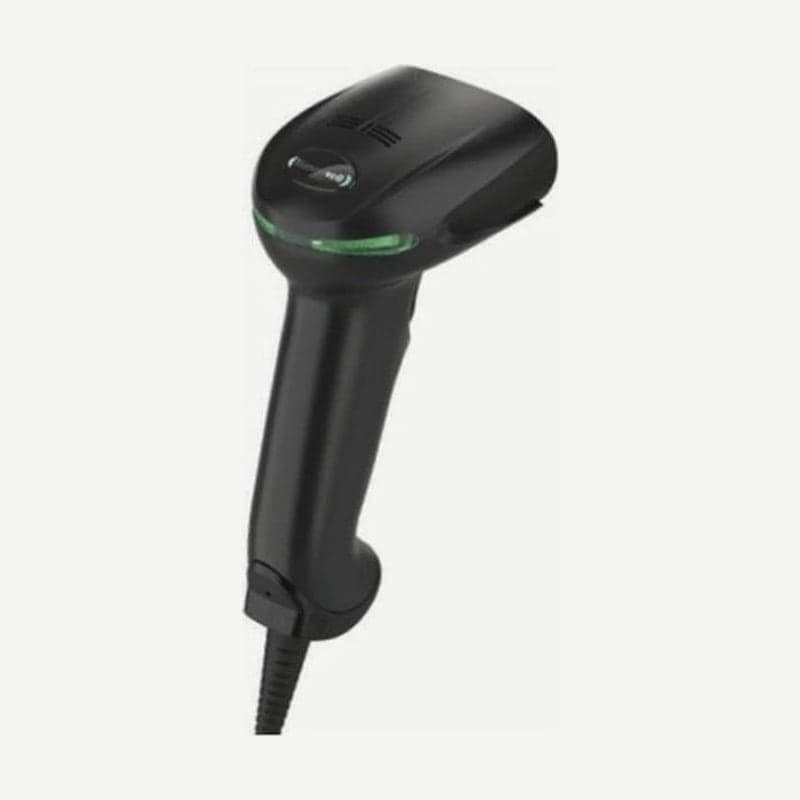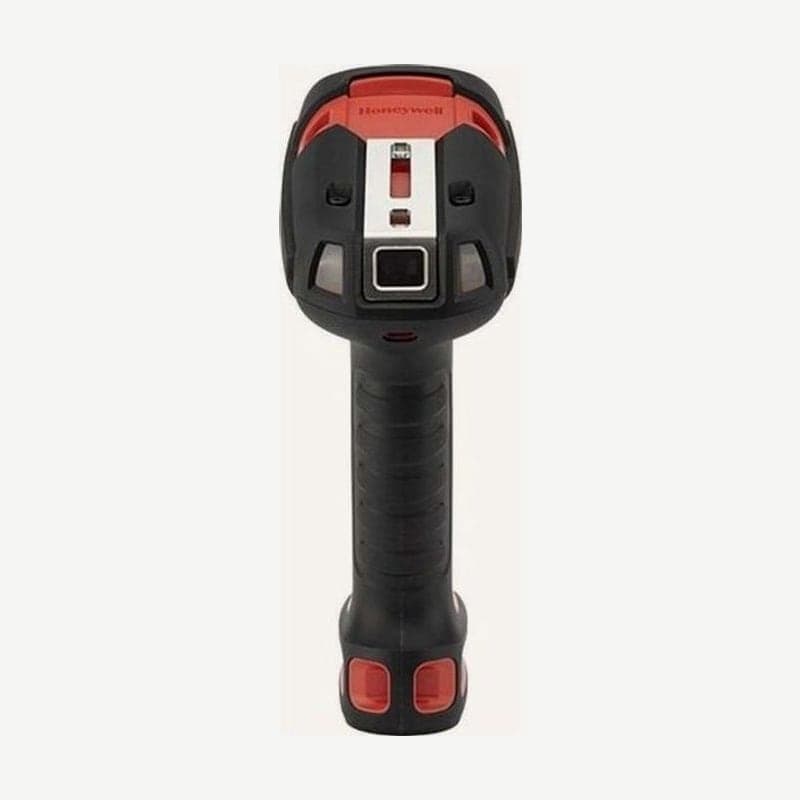
The Granit Ultra 2105i is a wireless ultra-rugged scanner that communicates with its base over Bluetooth v4.2. It comes in four models, SR, HD, XR, and XLR, which share the same body, battery, wireless, and durability specifications but differ in imager and aiming method, so once you decide the size and distance of the codes to read, the model follows.
Working range by model: SR, HD, XR, XLR
| Code | SR | HD | XR | XLR |
|---|---|---|---|---|
| 2 mil Code 39 | - | 0-72 mm | - | - |
| 13 mil UPC | 0-634 mm | 18-155 mm | 0-1,780 mm | 19-3,679 mm |
| 10 mil Data Matrix | 5-261 mm | 0-116 mm | 5-261 mm | 90-1,566 mm |
| 20 mil Code 128 | 0-1,033 mm | - | 0-2,812 mm | Up to 7,504 mm |
| 100 mil Code 39 | - | - | Up to 10,848 mm | Up to 29,918 mm |
The SR reads standard labels from contact to arm's length, and the HD is a high-density model that reads 1D and 2D codes down to 2 mil. The HD's maximum range for 13 mil UPC is 155 mm, so the SR is the right fit for reading carton labels from a distance.
The XR uses near and far imagers together, reading 13 mil UPC from 0 mm to 1,780 mm with one unit. It also reads 100 mil Code 39 from about 10.8 m away.
The XLR reads 100 mil Code 39 at about 30 m but is weaker on close codes. It cannot read 13 mil UPC closer than 19 mm or 10 mil Data Matrix closer than 90 mm, so we recommend the XR for workers who alternate between labels in hand and high racks.
Aiming and illumination by model
The SR and HD aim with a 525 nm green LED and illuminate with a 2700K warm white LED. The XR and XLR aim with a 520 nm green Class 2 laser, and illumination is a yellow-green LED.
The imager is 1280 x 1080 pixels on the SR, HD, and XR, and 1900 x 800 pixels on the XLR. It reads codes moving at 4,000 mm per second and labels with print contrast as low as 15%.
Battery capacity and charging time by method
| Charging method | Charging time |
|---|---|
| USB 2.0 port | Within 12 hours |
| USB BC1.2 port | 4 hours |
| Power adapter (5 V 3 A) | 4 hours |
| 4-slot battery charger (MB4-BAT-SCN11) | 4 hours |
The battery is 3300 mAh lithium-ion and scans up to 100,000 times per charge. The 14-hour battery life figure is based on reading twice per second.
Charging works only at 5-35°C. The scanner's lower operating limit is -20°C, so even when using it in cold areas down to -20°C, keep the base and the 4-slot charger on the room-temperature side.
Drop and water resistance test conditions
The scanner holds both IP65 and IP68 ratings, and the base is IP65. It is designed to 3 m drops per MIL-STD-810G at 25°C, 20 drops from 2.5 m at -20 to 50°C, and 50 drops from 2 m at -30 to 50°C.
It has been tested to 7,500 tumbles at 1 m and 3 million trigger actuations. It also withstands vibration up to 5G over 5-300 Hz.
Base installation and management tools
On a desk, the scanner is dropped into the base to charge; when the base is mounted vertically on a wall or vehicle, a locking mechanism holds the scanner in place. The base connects to the PC via USB, keyboard wedge, or RS-232 TTL.
When there are several codes in one view, Data Format Editor reads them all and outputs them in a set order. Settings and updates for multiple units are deployed together with SMU (Scanner Management Utility), and individual settings are changed with EZConfig. If you get stuck with settings, contact us for guidance specific to your 2105i model.